
call us today: +61755907739
Detecting Adware Spyware
  • Home
  • About
  • Contact
    • External Linking Policy
    • Commenting Policy
    • Terms Of Service
  • Sitemap
  • Search
  • Menu Menu

Spyware is another form of malicious software that can ifect your computer without your knowledge or consent. Spyware will collect information about you and pass it on to the actual creator of the spyware application. Keyloggers are also spyware and can be installed by companies or those wishing to spy on their spouse.

Noadware Spyware Blocker

March 24, 2012/0 Comments/in Adware, Spyware /by admin

No Adware the complete application for Adware, Spyware, Dialer, and Web Bug Scanning

What Is Noadware

Noadware is a spyware blocker and is constantly updated identify the latest killer spyware threats to your privacy and lifestyle. This detection spyware program will scan your computer for different Spyware, Adware, Dialers and Web Bug traces and eliminate them from you computer.

The Noadware spyware blocker software package has an easy to use interface which enables you to stop those annoying pop-ups and requests to install adware and spyware with a simple click of a button.
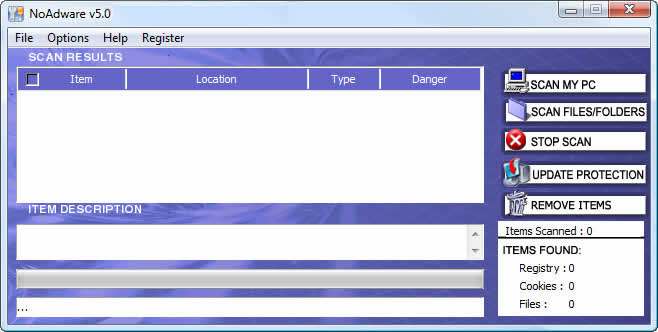
noadware start screen

Once the Adware scan completes you are presented with a screen showing you the location of any infected files with a level of danger for each file, meaning what the trheat level is to your computer and its security.
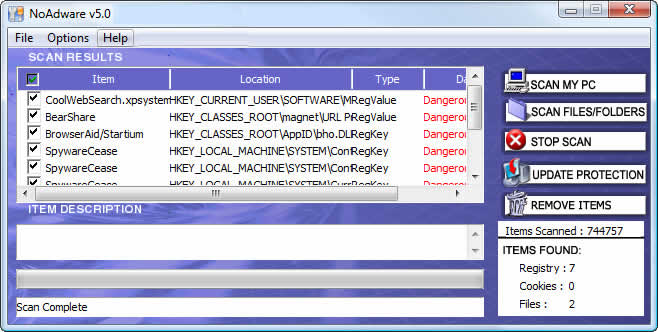
noadware scan

It also has browser and computer shields to help prevent your home page from being hijacked and to stop adware in its tracks before it can ever reach your computer.
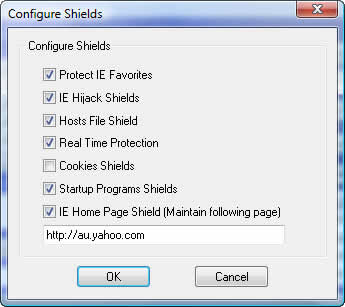
noadware cofigure shelds

All you have to do is a simple tick in the IE Protect favorites in the control panel of this spyware blocker and your browser will never be hijacked again.
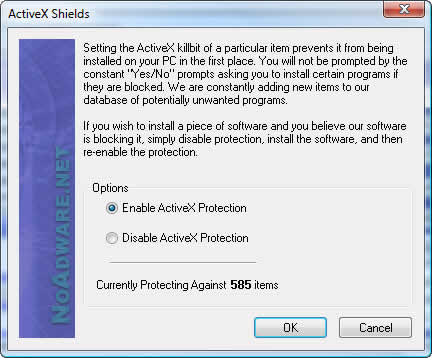
noadware activex shield

Noadware has a spyware blocker feature built in so that you are warned whenever a spyware adware program is attempting to add itself to your favorites or install to your computer.

Noadware Has Features To Check Your Computer Automatically

You can also set this spyware blocker program to automatically check your computer whether it is daily, weekly or even at start up.

Noadware allows you a Free Download so you can be sure your computer is safe. You owe it to yourself to have the best protection available today.

noadware free trial downloadDid you know that Identity theft is the number one crime in the World today and it could be that little killer spyware program that you don’t know is installed on your computer that is stealing your identity right now.

We give Noadware the thumbs up for as spyware blocker and home PC protection against Adware and Spyware.

How Does Adware Get On Your Computer?

Adware has been typically known to install along side such software programs as shareware and freeware. A perfect example of this is the software you install with Kazaa a peer-to-peer file sharing program.

When installing any programs such as these, remember nothing is for free and the supplier of the software usually has adware spyware hidden in the install file. The purpose for this is to track your movements so they can aggressively market products to you through pop-ups or browser hijacking.

noadware free trial downloadSpyware is a malicious program that is trying to invade your PRIVACY, attempting to Steal Your IDENTITY, and destroying your valuable computer.

Download a spyware blocker for a free scan and Block Adware and Spyware Today.

Three Types Of Non Malicious Spyware

August 29, 2011/0 Comments/in Spyware /by admin

In the last few years, spyware has been targeted in a lot of ways.

The law in many countries, including the United States, have passed laws that definitively outlaw some of its uses. There is also the constant updating and distribution of anti-spyware software that runs alongside or as a part of antivirus programs.

Lastly, one of the biggest ways spyware has been targeted is through informative media campaigns.

As a result people are all pretty much in fear of spyware. This is fair and expected, and actually for pretty much obvious reasons it’s encouraged. The thing is though that not everything that often gets classified as spyware is malicious, or at least not illegal.

There are forms of software that are designed to run undetected on a computer and record and report that aren’t necessarily breaking any laws. Whether or not these programs should still be considered spyware is up for a lot of debate.

Some adware companies have utilized the so-called spying strategy in the past, and many still do. When described as spyware though they have been known to get upset and lawsuits have been filed for defamation just because of the use of that word.

The more politically correct term used a lot in its place is “potentially unwanted software.” A few examples of (arguable) non malicious spyware are listed below.

Some Companies Use Non Malicious Spyware

A lot of employers track the work that their employees do and there is nothing wrong with that at all. The types of tracking used once included things such as casual observation, end of day reviews or checking back to see when and how long they were logged into their computers.

Nowadays employers are able to go the spyware route as well as or instead of doing those other things. The more common types of spyware that employers use are key logging applications. These run on the computer undetected and actually keep track of every key that’s pressed on the keyboard, thereby allowing the employer to easily look back over the amount of work being done.

Non Malicious Spyware Can Be Used For Spying On A Cheating Spouse

When one spouse suspects the other of cheating, or doing anything else undesirable, they can do all sorts of things. Short of actually having a conversation, they can hire detectives, follow them around, or catch them in a lie. Now there’s a more high-tech option that can be used.

Just like in the case of an office, key logging applications can be used to spy on a spouse. In a situation where the computer is mutually owned property, this has been argued as being a legal practice. The result is the ability to see if they are scheduling dates, writing love emails, etc.

Non Malicious Spyware Can Also Be Found In Some Forms Of Advertising

Advertising used to be put together as a result of lengthy market research campaigns. People were interviewed, surveyed and given products to test. The more modern alternative is to simply have a computer send back all the important tidbits. This is also sometimes referred to as adware.

Spyware is often installed on computers with user consent in exchange for getting free software. The spyware tracks what websites are visited so as to build a good understanding of what products that computer user would like. That way the advertisements that show up in their free software application will be targeted right at them.

Have you been spied on at work or maybe had a spouse use non malicious spyware to track your internet activities, if you have we would really like to here your story…

Spyware The Top Five Threats You Should Be Aware Of

August 28, 2011/0 Comments/in Computer Security, Spyware /by admin

There are many different types of spyware circulating around the internet these days, and there are many more forms of spyware being created every single day.

This isn’t to say that there are a lot of different versions of spyware that are doing virtually the same thing; what it does mean is this, various forms of spyware can act in many different ways depending on what information the creator wishes to extract from the infected computer.

In fact, not all of them are even spying in the traditional sense.

The following posts will explain five of the most common threats a spyware application can perform against you once your computer is infected.

Spyware Can Perform Keystroke Logging

What is Keystroke Logging? Every-time you type on your keyboard every letter and action is recorded and sent to the spyware creator.

This is perhaps one of the most widely known functions of spyware. It’s where the maliciously planted software tracks everything the computer user types. It is indiscriminate as to what information it gathers for it can all be sorted out later.

The result is an easily obtained collected of usernames and passwords, as well as the websites they go with. Of course, these applications can also gather things like banking information in the exact same manner.

Some Spyware Has Screen Capturing Capabilities

There are a few different terms for this depending on the specific function and method used, but in the end it’s the same thing basically. This form of spyware will capture screenshots of the infected computer.

URL monitoring would be used in this case as well so that the screenshots are only captured when the type of data being entered onto a website if worthy of the criminal to use.

This would include when you visit banking sites or even consumer sites where you are entering in credit card details to purchase a product or service.

Spyware Can Control Your Computer Remotely

Are you scared yet?

Because you really should be.

There are spyware applications that are created solely to take control of a home or business computer from anywhere in the world. This is very attractive to online hackers for many reasons including the fact that they can then use that infected computer as a source to send viruses, more spyware or simply spam whoever they wish and at anytime.

They do this in complete anonymity simply because all the files are being sent from the infected computer.

It could also be used to do little more than change settings at the hackers will, so as to make other things easier for them to get to such things as your personal details for identity theft or to simply withdraw money from your bank accounts.

Spyware Can Also Control Your Peripherals

The peripherals in question here would be the camera and the microphone in most situations. A good hacker can create spyware that turns those things on without the user’s knowledge.

This can be done at any given time and for a lot of different purposes. Some are simply to invade their privacy but when done to the right person it can be a way of attaining confidential information that’s spoken in a webcam, or for placing surveillance on a home or business for a robbery later on.

Spyware Also Tracks Where You Go Online

In this scenario the malicious software will be tracking what websites a computer visits. This can be done for a number of reasons. One is to work in tandem with screen capturing so that the spyware knows when the site being visited is a worthwhile target.

Another reason is to simply log a person’s habits and tastes so as to be able to tempt them with the most appropriate advertising later on.

In this last case the spyware isn’t always malicious and sometimes operates with user consent, however in saying that you really should be aware of what applications you are installing on your computer and who may or may not have external control of them.

Make sure you are protected from this growing threat online, use a spyware removal tool.

Have you ever been a victim of Spyware? If so we would really like to hear your story, post it below and share it with our community.

How to Remove Spyware From Your Computer

August 27, 2011/0 Comments/in Spyware /by admin

No one wants spyware on their computer. It’s invasive, often bothersome, and it can even lead to identity theft or stolen money.

One of the most difficult problems when it comes to removing spyware from a computer is that it so rarely makes itself known.

Gone are the days when malicious software makers wanted users to see their destructive powers, and enter the days where they want to go undetected so as to spy for longer periods of time.

Firstly Identify You Have A Problem

The first step is to identify the problem in the first place. Even if you aren’t suspecting any type of spyware on your system it’s still a good idea to run checks whenever possible.

Many popular computer protection suites have built-in spyware tools that will be able to run a scan on your computer.

Also, if you just installed a program and then decided you shouldn’t have trusted it, or if you feel that your computer has suddenly got a lot slower even after rebooting, you may be the victim of spyware.

If You Have A Spyware Infection Disconnect From The Internet

This is the first and most important thing to do. Don’t assume that you’ll fix the problem and try to avoid situations where you have to search the web in order to find spyware solutions. The real damage of spyware is done when it sends information about you back to the criminals who released the spyware in the first place.

Important: So long as you aren’t online this can’t happen.

The first thing to do then is close any internet related software. Once that’s done, physically disconnect your computer from the phone line or router, just to be certain.

If You Can Locate The Spyware Infected Application Un-Install It Immediately

The best spyware won’t be this easy to find and remove as it’s designed to bury itself deep inside your computer’s system where it can safely hide. Still, some of these applications aren’t so advanced and they show up like any other application would.

Therefore, the first thing to do is check with Windows’ Add/Remove Program list (found through the control panel) and search for the unwanted program. Once you’ve told Windows to remove it, reboot your computer and see if the issues have gone away.

Run A Complete Computer Scan Of Your Operating System

Even if the above step worked, you will still want to let your antivirus software (the kind that is also designed to hunt down spyware such as Spyware Doctor) run a deep system scan. Before beginning the scan make sure you’ve selected the options that allow the antivirus program to remove the threats whenever possible.

Simply picking them out and telling you they are there won’t help in any way.

Once You Eliminate The Spyware You Need To Check Your Settings

You don’t want to start surfing online right away. The first thing to do is to checkout your browser’s settings and make sure the spyware didn’t toy around with them before being deleted.

For instance, it could have added malicious websites to your browser’s safe list. Once you’ve taken care of these problems you should be all clear to continue on, and hope that you’ll be able to avoid this problem in the future.

The fastest and most effective way to stay protected from spyware is by using a spyware detection tool. Post you comments below and let us know what you have found to be effective when removing spyware from your computer system.

How To Prevent Spyware From Getting On Your Computer

August 26, 2011/0 Comments/in Spyware /by admin

Spyware is more than just a nuisance. It’s downright dangerous!

It’s something that can truly threaten many aspects of your life. The people who make and use spyware are often fraudsters and con artists trying to make a fortune at your expense.

Other times the malicious software comes from large criminal organizations who deal in credit card and identity theft. In the best case scenarios of spyware you will end up with annoyances on your screen like unwanted pop-up ads.

For all of those reasons everyone needs to take steps to protect their computers against this type of attack. Of course the best starting defense to any problem is knowledge, and so the following list of tactics for avoiding spyware attacks are there to help you along.

Avoiding Spyware Is About Staying Up To Date On The Latest Threats

You don’t have to research all the nitty-gritty technical details of exactly how the latest spyware operates. What you do have to do is follow the tech news to see what the new threats are.

For instance, if there are reports of security holes in the operating system you use you want to be aware of it from the start, not find out weeks later.

Likewise, there may be fraudulent emails going around coaxing people to follow links. Know about them before you encounter them.

Only Visit Trusted Websites

Avoid unknown or suspicious websites whenever you can. Naturally you can’t confine your web activity to only the sites you are familiar with, but you can still take precautions.

If you’re on a website you aren’t familiar with, don’t blindly follow its links to other sites. That habit will just undoubtedly steer you somewhere bad down the line.

You should also, obviously, avoid websites that are known to have security issues associated with them.

Always Research Software Before Installing

Back to that protecting yourself with knowledge idea. A lot of spyware makes its way to a computer by disguising itself as a more legitimate and wanted application. In other cases it simply attached itself to applications that are otherwise what they appear to be. Because of this it’s a good idea to do a bit of poking around for user reviews and write-ups in established magazines.

Basically, you want to see if the software has a good reputation preceding it before you put it on your computer.

Make Sure Your Operating System Is Fully Updated

Have your operating system setup so that it regularly updates itself, patching up any security holes that may exist. If you find out about any of these holes before your operating system does an update, then force one right away.

Run A Scan Of Your System Regularly

You should always be running regular scans of your computer using applications such as AVG Internet Security or even Spyware Doctor with Antivirus so as to search for any viruses or Malware that has made its way there. No matter how much preventative work you do to keep these things off your computer, spyware might still find a way in.

All you can do in that situation is get rid of the spyware infection before any real damage is done.

Have you had a spyware infection? Then why not tell us your story by posting your comments below.

Spyware A Major Computer Threat

February 10, 2011/0 Comments/in Spyware /by admin

Spyware has changed the face of computer threats forever.

It has helped make it so that computer users no longer have to fear for their computer’s health, but they must fear loss of privacy as well. In that way it has totally changed the game of computer protection and taken it to a level of utmost importance.

Understanding The Spyware Threat

Back in the early days of viruses, computer users were able to avoid them with relative ease; though, most didn’t really take the right precautions.

The fact was though, sticking to known software and computer disks that hadn’t been floating around the circuit was enough to keep things relatively safe.

This was back before the days of the internet, of course, when viruses found a new means of getting around.

When viruses first came into the mainstream people were slow to adopt things like antivirus software on their computers. Many just didn’t see the need to waste money. The fact of the matter was that viruses weren’t designed for anyone’s gain, but instead to cause a lot of trouble.

That meant that the worst case scenario a person’s computer could face was having to be reformatted, and therefore regular backups of data seemed to be protection enough.

When the internet gained popularity in the 90s viruses were able to spread at much faster rates than they had in the past. That alone caused more people to find the nuisance of computer viruses getting to them.

To make matters worse there were so many more viruses to deal with, with more showing up at rates that were too fast to keep up with.

Spyware Still Was Not The Major Computer Threat

These threats soon caused more people to give into the need of having antivirus software on their computers. But the true threats still weren’t fully understood, nor were the real dangers completely revealed until sometime later when spyware began to really make its mark.

Something else existed amongst common computer users’ knowledge back then. It was hacking. Everyone knew that hacking was a possibility but few people feared it because they didn’t have much information worth being hacked into, or they simply figured the odds of avoiding it were in their favour. Plus, a basic firewall seemed to do the trick.

Once Spyware Surfaced The Problems Really Started

Once spyware started to spread and people began to be informed about it, the real vulnerabilities of their computer lifestyles were revealed. The first problem was the fact that spyware didn’t always come in the form of a virus.

The second problem was it was often able to break through a firewall because users were tricked into downloading them purposefully. The third problem was they evolved to a point where they never made themselves known and could therefore operate on a computer for a long time without causing any suspicion.

The worst problem of all is that they were designed with truly malicious intent, which was and is to steal personal information, identities and money. Finally the computer world has got to a point where anyone can be at risk and where everyone can’t afford to not take precautions. Spyware isn’t just out to annoy.

Are you really protected from this growing Spyware Threat – Check Your Computer Now.

Save

The Various Ways Spyware Attacks

February 5, 2011/0 Comments/in Spyware /by admin

Spyware refers to a type of malicious software that gets installed onto a computer without informed consent and tracks and reports information gathered from that computer.

There are, of course, many different forms of spyware and each form has a different intent. Some are spyware makers are at least trying to walk that line of legality while others are so far past it they wouldn’t even pretend.

Understanding all of the threats that may face your computer at one point or another is important. Chances are you are running software designed to protect against malicious software, but you might not know exactly what damage can be done without it.

So the following takes a look at some of the various threats involved with different types of spyware.

Spyware And Keystroke Tracking

Some applications run in the background of your computer and are designed so that they won’t be easily found out.

Then they actually create a log of every key that is pressed on the computer when writing emails, creating documents, surfing the web or entering passwords. Virtually everything will get logged and then reported back through unseen transmission.

Sometimes these applications are actually installed directly onto the computer on purpose to track employees or to spy on a spouse.

Spyware And Advertising

There is advertising all over the internet and that’s what makes it tick. Fair enough. Visit a site, click on an ad and everyone is happy. With spyware though, advertisers can track your browsing and even purchasing habits. That way they’ll know which advertisements to send your way.

Via adware they’ll then pretty much bombard you with advertisements in a way that pretty much destroys the computer using experience.

Stealware Is Another Form Of Spyware

One form of spyware earned itself this dubbing. This type of malicious software doesn’t go after the end user directly but rather diverts money from legitimate affiliate marketing campaigns. For instance, a person might click on an ad which sends them to a retail site where they buy a product.

The site that sent them there earns a commission. This type of spyware inserts its own affiliate tag into the user info thereby diverting money away from the real affiliate.

A Widely Used Form Of Spyware Was Dialing

One of the many things spyware programs are good at doing is changing different configurations on a computer. A popular form of spyware essentially hacks the modem and causes it to dial phone numbers that will cost the computer owner money.

These can be 900 numbers or overseas ISPs. The computer owner will wind up with one large phone bill and the spyware distributor will be reaping all kinds of benefits.

Spyware Can Change Your Software Settings

More than just reprogramming a modem, spyware can also change the settings to a lot of different things. For instance, it can change the user preferences or default settings of virtually any installed software.

This includes web browsers.

By doing this the spyware can effectively open the door for all sorts of other attacks because it has weakened the computer’s defenses. From there the criminals can have easier access to do just about anything they want.

Get protected and stay protected with PC Tools Spyware Doctor.

Who Uses Spyware

February 4, 2011/0 Comments/in Spyware /by admin

Spyware isn’t definitively a malicious type of software nor is it always installed on a computer as the result of an unknown party’s deceit.

While it’s true that most of the spyware people are worrying about is the kind that is out to steal from them, theft isn’t the only intent at all. The following examples take a look at the uses and users of spyware.

Freeware Developers Have Been Known To Use Spyware

These are the guys who make free software but want to recoup their costs in advertising. The result is ads embedded in their software applications. For the most part users agree to those terms.

What the users don’t always know—and in all fairness, what the developers may not have always known—is that the firms that control the advertisements have installed spyware along with the other application.

Their spyware tracks a users basic surfing habits to better decide which ads to place on their screen.

Many Random Websites Can Use Spyware

No, not very specific, but incredibly common. Websites are known to install what are known as cookies on the computer of someone who visited the site. For the most part these aren’t at all malicious and don’t do any tangible harm. One of the purposes of cookies is to help websites learn about its repeat visitors.

Some people object to this on privacy grounds, and some antispyware applications are even known to block it. Most web browsers also give the option to allow or not allow them.

Those Having Marital Problems Are Also Known To Use Spyware

Yes the world has come to this. Whether it be a marriage issue or another personal issue altogether, one of the big uses of spyware these days is to dig up dirt on someone close to you. A suspicious person can, for instance, install key tracking spyware onto their spouse’s computer.

Then the software will covertly send back all of the things that that person typed. These programs may also send back information on websites that were visited.

Malicious Online Marketers Use Spyware

These are the ones who fool internet users to download and install what is seemingly legitimate software. They are also known to go to the extremes of creating websites that actually force or trick the browser into downloading the application.

Once installed the software will track someone’s habits and send them ads based on various factors. Those ads, however, will likely popup at all sorts of annoying times, and will often not stop.

Organized Crime Use Spyware

Imagine Al Capone sitting cozily in front of his desktop computer. Organized crime has reached the point of computer crimes. One of the more common things organized crime groups will use spyware is to get hold of as much personal information as they can about as many different people as they can.

That information can be used quite lucratively for identity theft.

Other Criminals Use Spyware

Another common way of using spyware for full out criminal purposes is to steal banking information. This isn’t hard once the right spyware is installed. It will send back information like bank account numbers and credit card numbers.

Both big scale crime and small scale crime take advantage of this possibility as well as identity theft.

A great application for effectively removing Malware and Spyware is Malware Bytes

Facts You Should Know About Spyware

February 3, 2011/0 Comments/in Spyware /by admin

Spyware is only one of the many different types of threats that go up against computers these days and some of them are actually quite severe in terms of the type of impact they can have on a person.

Even a well protected computer can fall victim to one of numerous threats. The results are anything from a slowed down computer to actual theft of information and identity. One of the most feared types of these are programs known as spyware.

So What Is It?

Spyware is a program that gets installed on a person’s computer without their knowledge. It operates behind the scenes, never revealing itself to the computer’s user.

While it is operating it essentially spies, as the name implies.

The things that are actually being spied on aren’t consistent from one application to the next. As it collects the information though, it reports back covertly so that a third-party can take whatever they need from the information.

What Does It Affect…

Virtually anything that’s done on the computer. Some forms of spyware will pretty much go after everything a user does while on their computer. To do this it will actually record every key press made, thereby being able to record user-names and passwords as well as the content of email messages and typed documents.

Other applications will track what websites a user goes to, information that could be used to various benefits.

Why Not All Spyware Is Bad

At least, not necessarily. It depends on how you’d define bad and what kind of information you’re willing to give up. Often, free software that’s completely legitimate will support itself through advertising.

To do this best, many of these programs add a form of spyware onto a computer that allows them to track the types of sites a user visits, thereby knowing what the best ads to display are.

Generally speaking users are warned about this feature before any installation is made, so they can choose to opt out or just not install.

The Ways This Gets Onto Your Computer

This type of computer threat rarely works in the same way as a virus. It doesn’t try to spread or duplicate itself from one machine to the next. Instead it finds its way onto computers through misrepresentation or via holes in a software application.

As in the case of the shareware and freeware examples above, the spyware makes its way onto a computer by being packaged with another software application, and often the users trusts and agrees to its terms.

It’s Not Always Covert

One of the biggest fears is that it doesn’t make itself known. For the longest time computer attacks were all about causing visible damage, but this type of infection isn’t usually after that and has long-term goals instead.

That said, when malicious spyware is packed with malicious Adware, the result is a long string of pop up ads on a computer screen. In those cases the user will instantly know they have spyware and will have to take the necessary steps in dealing with it.

Use a trusted spyware removal program such as BullGuard Internet Security.

Spyware Frequently Asked Questions

February 2, 2011/0 Comments/in Spyware /by admin

To many people out there, spyware is just a word that’s tossed around.

They know it’s something they don’t want on their computers but they don’t quite understand why. If you are one of those who don’t yet understand the workings of spyware and how to deal with it, then take a look at this short list of frequently asked questions.

What Is Spyware?

The term actually gets applied rather broadly these days, so pinning it down to an exact definition isn’t all that easy. The important thing to grasp is that it’s an executable application that gets installed on a computer without the user’s knowledge. It then records and reports on various activities that are done on the computer.

What Are The Sorts Of Things Spyware Will Track?

Spyware often tracks the websites that are visited and uses the information to display popup ads that appear due to the unwanted installation of adware. It could also record everything typed on the computer, which would give the person collecting the information access to everything from passwords to documents.

In that same way it could also steal banking and credit card information.

Who Actually Creates Spyware?

While things like computer viruses were once created by pranksters and those who simply wanted to wreak havoc, spyware is more closely related to those with actual criminal intents. Criminal organizations are now known to regularly create this type of program for the purposes of identity theft and robbery and fraud.

The type of spyware related to popup ads, however, are made and distributed by marketing companies, often with misled consent.

What’s The Worst Spyware Can Do To Me?

Well, it won’t jump out and kill you but it can still hurt in a great number of ways. Spyware can use the information it steals from you to take money right out of your bank account or to purchase goods on your credit card.

On the lighter side of things, it can end up hurting your computer’s performance, slowing down its operation by running in the background. You may even find your computer starts to crash regularly.

How Does Spyware Get On My Computer If It’s Not A Virus?

Some spyware is in fact distributed as a virus and in turn it manages to spread and duplicate itself. This means your computer can get infected through sharing of disks or surfing the net. Most often though, it will get to your computer through actions you do yourself after being deceived.

For instance, an add will promise a great free software program and when you install it you unknowingly install spyware along with it.

How Do I Get Rid Of Spyware?

As it’s not a virus, it isn’t gotten rid of through the use of traditional antivirus software; though, most present day antivirus software comes with built in spyware protection as well. There are also applications designed specifically for finding and eliminating spyware, and most web browsers try to do their share of battling it as well.

Page 3 of 3123

Paid Ads

Recent Posts

  • What To Look For In Internet Security Software
  • How To Use Your Antivirus Software Correctly
  • What Are The Most Suitable Internet Security Systems
  • Antivirus Software FAQs
  • Warnings About Antivirus Software

Recent Comments

  • Michaelsen on Regcure Windows Cleaner, Clean, Repair And Optimize Your Computer
  • Jacob Koshy on Preventing PC Errors and Problems
  • Marry Smith on Preventing PC Errors and Problems
  • Subodh Gupta on Tips To Protect Yourself From A Computer Virus
  • Sam Hunt on RegGenie Is It The Best Registry Cleaner

More Paid Ads

© Copyright - Detecting Adware Spyware - powered by Enfold WordPress Theme
  • No Spam
  • Copyright
  • Disclaimer
  • DMCA
  • Links
  • FTC
  • Privacy
  • Sitemap
  • Social Media
  • TOS
Scroll to top

This site uses cookies. By continuing to browse the site, you are agreeing to our use of cookies.

OKLearn more

Cookie and Privacy Settings


How we use cookies

We may request cookies to be set on your device. We use cookies to let us know when you visit our websites, how you interact with us, to enrich your user experience, and to customize your relationship with our website.

Click on the different category headings to find out more. You can also change some of your preferences. Note that blocking some types of cookies may impact your experience on our websites and the services we are able to offer.

Essential Website Cookies

These cookies are strictly necessary to provide you with services available through our website and to use some of its features.

Because these cookies are strictly necessary to deliver the website, you cannot refuse them without impacting how our site functions. You can block or delete them by changing your browser settings and force blocking all cookies on this website.

Google Analytics Cookies

These cookies collect information that is used either in aggregate form to help us understand how our website is being used or how effective our marketing campaigns are, or to help us customize our website and application for you in order to enhance your experience.

If you do not want that we track your visist to our site you can disable tracking in your browser here:

Other external services

We also use different external services like Google Webfonts, Google Maps and external Video providers. Since these providers may collect personal data like your IP address we allow you to block them here. Please be aware that this might heavily reduce the functionality and appearance of our site. Changes will take effect once you reload the page.

Google Webfont Settings:

Google Map Settings:

Vimeo and Youtube video embeds:

Privacy Policy

You can read about our cookies and privacy settings in detail on our Privacy Policy Page.

Privacy Policy
Accept settingsHide notification only